What To Know:
-
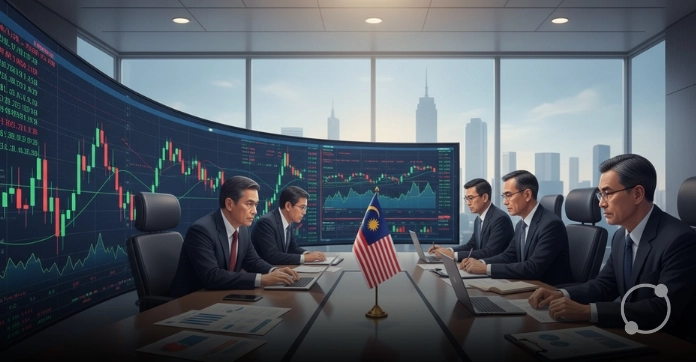
Malaysia’s Securities Commission will roll out new rules next year allowing licensed exchanges to list tokens through their own governance processes, ending the need for case-by-case approval.
-
Regulators expect exchanges to take on greater accountability, with stronger investor safeguards, tighter wallet security, and higher capital requirements.
-
Tokenization, stablecoin testing, and expanding custody services are set to drive Malaysia’s next phase of digital asset growth.
Malaysia’s Securities Commission (SC) is preparing a major development in its crypto regulation. The regulator will introduce new guidelines next year that allow licensed exchanges to list tokens using their own internal governance processes, and will remove the need for case-by-case approval. The plan was outlined by SC Executive Director Wong Huei Ching during the Finternet 2025 Asia Digital Finance Summit on November 4.
Malaysia Updates its Crypto Listing Rules
The decision marks the country’s biggest update to its crypto framework since digital assets were brought under the securities rulebook in 2019. Wong said the regulator has spent five to six years supervising registered exchanges and now feels confident the sector can handle greater responsibility. The enhanced rules are the result of that assessment.
Under the new framework, exchanges will no longer be required to seek direct approval for each crypto they intend to list. Instead, they must rely on internal governance standards and demonstrate stronger controls. Wong said the SC no longer intends to “babysit” operators, but expects higher accountability in return. Those expectations include stronger investor-protection measures, tighter wallet security measures, and more robust capital requirements.
The regulator wants the market to take on a more institutional profile. Wong said several large firms are already exploring entry into Malaysia’s crypto sector. Their arrival, she added, could help strengthen trust between banking institutions and crypto asset intermediaries. In line with this goal, the SC and Bank Negara Malaysia have recently brought compliance teams from both sectors together for joint discussions.
Wong noted that the first meetings highlighted gaps in understanding between banks and crypto businesses. She said both sides acknowledged that credibility concerns continue to slow progress. The joint sessions are intended to address those issues and help bring in a clearer path for cooperation.
Malaysia’s digital asset ecosystem has expanded steadily. Twenty-one firms now operate under the country’s regulatory umbrella, offering products that range from crypto funds to derivatives. Broking activities will be added to that list soon. Licensed brokers will be allowed to tap global liquidity pools to secure better pricing for Malaysian clients.
The SC is also preparing rules for tokenization. Wong said regulators want traditional markets to benefit from the efficiencies demonstrated in the crypto sector. To support that objective, the SC has consulted industry players on guidelines covering tokenized capital market products. The framework will define issuer obligations, intermediary responsibilities, and requirements for handling tokenized securities.
Tokenization has gained momentum among Malaysian firms. Wong said the topic drew little attention a year ago, but interest surged in 2024 after the SC and central bank released consultation papers and discussion documents. Their proposals generated strong feedback and a wave of new inquiries. Regulators now expect more activity in the coming year as companies test tokenization for both assets and payments.
Stablecoins remain another active area of discussion. Wong said Bank Negara Malaysia has taken a supportive stance toward MYR-backed stablecoins. The central bank invited firms to test such products in its regulatory sandbox and is open to evaluating their use cases. Wong encouraged market participants to experiment with MYR-backed designs, noting that successful pilots could lead to broader conversations about foreign-currency stablecoins.
Industry interest is rising across multiple segments. Wong said more tokenized products should emerge in the short to medium term, supported by growing participation from brokers and fund managers. Large international players are also preparing to enter the market.
Malaysia is working on a high-profile tokenization pilot with sovereign wealth fund Khazanah Nasional. The project involves tokenizing its bonds and is expected to go live next year. Wong described it as one of several public-private collaborations now underway.
Custody is also expanding. Malaysia has three licensed digital asset custodians, and several local banks are developing plans to offer custody services of their own. Wong said the response from banks has been positive and that the custody market should grow as demand increases.
Also Read: US Senate Bill Drafts Still Pending; Might Be Delayed Till December