What To Know:
- Uniswap has submitted the UNIfication proposal for a final governance vote starting December 20.
- The proposal, if favored, would activate protocol fees on v2 and select v3 pools and trigger a planned burn of 100 million UNI from the treasury after a two-day lock-up.
- Beyond fee activation, the plan introduces liquidity incentives, aggregator hooks for Uniswap v4, permanent locking of Unisocks liquidity, and organizational changes.
Uniswap has moved closer to a major shift in how its protocol generates value, after founder Hayden Adams confirmed the submission of the UNIfication proposal for a final governance vote. Voting is scheduled to begin at 11:30 a.m. Beijing Time on December 20 and run through December 25, placing one of the most consequential proposals in the protocol’s history directly in the hands of UNI holders.
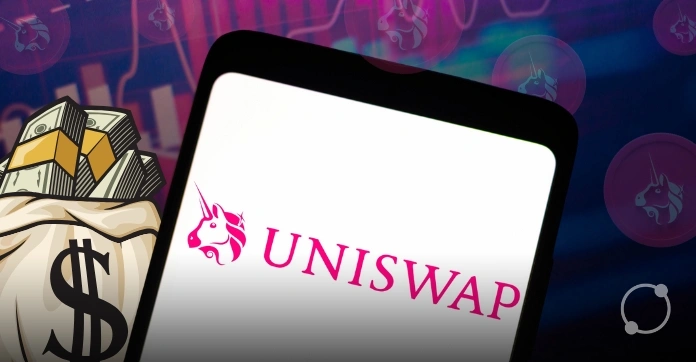
Uniswap Governance Proposal Plans To Burn 100 Million $UNI
If approved, the proposal would activate Uniswap’s long-dormant protocol fee switch across v2 and select v3 pools on Ethereum mainnet. Following a two-day lock-up period, Uniswap Labs plans to burn 100 million UNI tokens from the treasury. The burn is designed to reflect an estimated amount of UNI that could have been removed from circulation had protocol fees been active since the token’s launch.
The proposal also directs fees generated from Unichain, Uniswap’s recently launched layer-2 network, into the same burn mechanism. Unichain has processed roughly $100 billion in annualized decentralized exchange volume within nine months of launch, generating about $7.5 million in annualized sequencer fees. After data costs and Optimism’s share are deducted, remaining fees would be allocated to UNI burns.
The proposal essentially outlines a long-term economic structure where protocol usage directly reduces UNI supply. Uniswap Labs and the Uniswap Foundation described the move to align incentives across developers, liquidity providers, and token holders, while helping the protocol for sustained growth as decentralized trading volumes continue to rise.
Uniswap’s protocol has processed close to $4 trillion in cumulative trading volume, supported by millions of wallets and thousands of developers. Yet UNI holders have historically not captured direct value from that activity. The fee switch, which requires governance approval, has remained off since launch. This proposal seeks to change that situation through a structured and gradual rollout.
Under the plan, protocol fees would first be enabled on Uniswap v2 pools and a selected group of v3 pools that account for the majority of Ethereum mainnet liquidity. On v2, liquidity provider fees would decline from 0.3 percent to 0.25 percent, with the remaining 0.05 percent directed to the protocol. On v3, protocol fees would be set as a fraction of existing LP fees, adjustable at the pool level by governance.
Uniswap Labs said it would assist the community in monitoring market impact and recommending adjustments. Governance votes on fee parameters would also move directly to Snapshot and on-chain voting, bypassing earlier discussion stages to speed execution.
Beyond fees, the proposal introduces a Protocol Fee Discount Auction mechanism aimed at improving liquidity provider returns. The system auctions temporary protocol fee exemptions to a single address, with auction proceeds sent to the UNI burn contract. Early analysis suggests the mechanism could add incremental gains to LP performance by internalizing value that would otherwise flow to validators or searchers.
The proposal also expands Uniswap v4 functionality through aggregator hooks. These hooks would allow Uniswap to source liquidity from external on-chain protocols while applying a programmatic UNI burn. This effectively turns v4 into an on-chain aggregator that third parties can integrate.
Governance-owned Unisocks liquidity is also addressed. The plan calls for migrating the legacy Uniswap v1 SOCKS/ETH position to Uniswap v4 on Unichain, followed by burning the liquidity position. Once executed, the supply curve would be permanently locked.
Organizational changes are another part of the proposal. Ecosystem support teams currently housed within the Uniswap Foundation would move to Uniswap Labs, consolidating development, governance support, and ecosystem growth under a single structure. Labs would shift focus entirely toward protocol development and expansion, and even set interface, wallet, and API fees to zero.
To fund these efforts, the proposal establishes an annual growth budget of 20 million UNI, distributed quarterly beginning in 2026 through a vesting contract. The budget would be governed by a services agreement designed to align Labs’ activities with UNI holder interests.
Also Read: Aave Governance Rift Exposes Growing Tensions Over Value Capture