
What To Know:
- Vitalik Buterin said Ethereum’s improved Layer 1 scaling means Layer 2s should no longer be framed mainly as “brand sharding”.
- Buterin urged them to focus on distinct features like privacy, low latency, and application-specific design instead.
- His remarks split the community, with some welcoming a renewed emphasis on a stronger base layer, while others warned the shift could hurt Layer 2 confidence, funding, and long-term roadmaps.
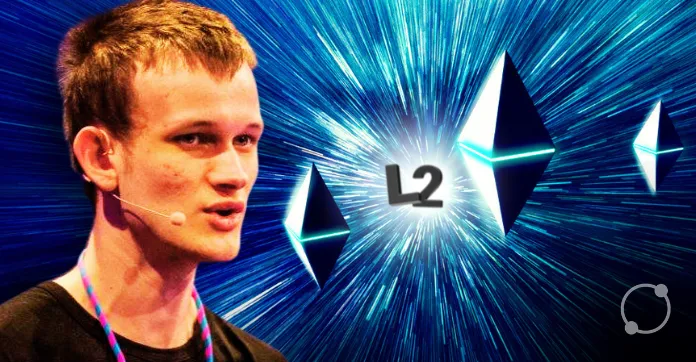
Ethereum co-founder Vitalik Buterin has yet again reignited debate across the crypto ecosystem after publicly reassessing the role of Layer 2 networks in Ethereum’s future. In a recent post, Buterin argued that Ethereum’s main chain has advanced far enough in its own scaling efforts that the original vision of Layer 2s as a form of “brand sharding” no longer holds. As Ethereum raises its gas limit and improves throughput at the base layer, he said, Layer 2s should no longer be framed primarily as scaling extensions of Layer 1.
Instead, Buterin called for a repositioning. In his view, many Layer 2 systems cannot fully deliver on the features once associated with brand sharding, and some may remain indefinitely in early development phases due to regulatory or client constraints. That reality, he suggested, makes it necessary for Layer 2 projects to justify their existence in other ways. He pointed to areas such as privacy-focused virtual machines, application-specific performance, ultra-high throughput, low-latency execution, non-financial applications including social, identity, or AI use cases, and built-in oracle functionality.
Vitalik Buterin on Layer 2 Networks
His comments quickly split opinion within the Ethereum community. A segment of developers and commentators welcomed the shift, arguing that the Layer 2 narrative has long served to paper over the slow pace of Layer 1 scaling. They highlighted concerns around centralization, fragmented liquidity, and new risk layers introduced by many rollups.
Bankless co-founder Ryan Sean Adams described the moment as a turning point, saying Ethereum’s long-term strength depends on a robust and capable base layer. The Block founder Mike Dudas echoed that sentiment, noting that the industry is only now acknowledging arguments raised several years ago.
Others reacted with caution. Those who feared that this kind of messaging wouldn’t instill confidence in any existing Layer 2 projects and could complicate fundraising even further, especially for groups that are still making their roadmaps ready. Rollup advocates emphasized that Layer 2s remain useful in practice for certain use cases, especially for high transaction throughput or specific execution environments, and thus Layer 2s are still applicable.
In the Chinese-language crypto community, Buterin’s comments were widely viewed as an abandonment of Layer 2s but some observers countered, describing the comments as a redefinition and not a withdrawal. Outside of the Ethereum Foundation, industry voices also weighed in.
Paradigm general partner Dan Robinson acknowledged improvements at the Layer 1 level but argued that Ethereum’s scaling roadmap remains cautious. He pointed to unresolved issues around latency and maximal extractable value, saying that without faster block times or changes to the current proposer-builder separation model, Layer 2s still have meaningful room to complement the base chain. Avalanche founder Emin Gün Sirer took a sharper tone,and claimed that alternative networks anticipated these debates years ago and built accordingly.
Buterin’s broader discussion also revisited the technical landscape of rollups. He outlined two dominant models. Based rollups derive transaction ordering directly from Ethereum Layer 1, with rollup blocks submitted as Layer 1 transactions. This design offers synchronous composability with Ethereum’s liquidity and state.
Sequenced rollups, by contrast, rely on off-chain ordering mechanisms such as centralized sequencers or Byzantine fault-tolerant committees, periodically committing their history back to Layer 1. Their advantage lies in significantly lower latency.
He then described a hybrid design intended to capture benefits from both approaches. The proposal introduces three types of Layer 2 blocks: regular sequenced blocks that arrive frequently.
The other types of L2 blocks include slot-ending sequenced blocks that signal readiness for inclusion on Layer 1 within a given slot, and based blocks that can be built permissionlessly on top of those slot-ending blocks. In this model, the sequencer manages timing to preserve low latency while still allowing builders to include blocks on Layer 1.
The design comes with constraints. It requires Layer 2 systems to accept reverts when Layer 1 reorgs occur, since based blocks and subsequent sequenced blocks would roll back together. While normal conditions would keep delays short, edge cases such as missing proposers could introduce longer waits.
The approach also is insufficient for full permissionlessness since a based block is contingent on sequencer-issued certificates; though forced-inclusion mechanisms on Layer 1 could partially address that gap.
Also Read: Vitalik Buterin Offers Two-Layer Model for Future On-chain Governance