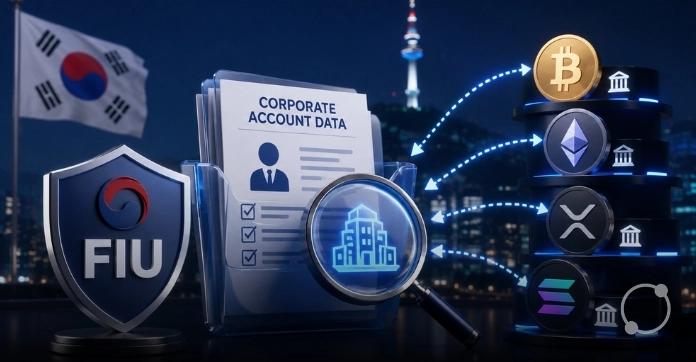
South Korea’s Financial Intelligence Unit or FIU has asked for data from major virtual asset exchanges on Korean won cash held in corporate accounts. This is so as authorities prepare for comprehensive corporate participation in the crypto niche.
The request comes as a broader regulatory buildout in South Korea, which recently locked in a 2027 start date for its crypto capital gains tax after years of delay. The request covers the present market, their won holdings and records related to the return of funds. The newest move comes as South Korean regulators prepare for the next phase of corporate crypto participation.
The FIU’s request could help authorities with a better picture of existing corporate cash balances and how exchanges have managed won held by corporate customers. The second phase of the federal authorities’ roadmap is expected to eventually let around 3,500 listed companies and investment corporations to trade virtual assets on a trial basis. Although its implementation date remains undetermined.
FIU Seeks Corporate Won Holdings and Return Records
As per the information, the FIU recently asked the Digital Asset Exchange Joint Council to submit information on Korean won held in corporate accounts at virtual asset exchanges. The information was requested from five major exchanges: Upbit, Bithumb, Coinone, DigitalX, and Gopax.
The FIU allegedly asked whether corporate customers who registered before the enforcement of the Specific Financial Information Act held Korean won cash in their exchange accounts. It also asked for information on the magnitude of these holdings, cases where won was returned to corporate customers, and exchange suggestions regarding the process for returning the funds.
The request comes as authorities evaluate how present corporate accounts fit into the extension of corporate participation in the digital asset market. The information on cash holdings and fund returns could benefit regulators to understand the existing positions of corporate customers before trading access is introduced.
The newest request follows other preparations by South Korean regulators and the domestic exchange industry. In May, the FIU allegedly requested data on anti-money laundering, AML, preparations from individual exchanges.
This was done through the Digital Exchange Joint Council, DAXA, launched in April on the trading of the top 20 virtual assets by market capitalization at each exchange permitted to be sold. The context shows that regulators and exchanges have been assessing multiple areas of the market ahead of the broader corporate participation.
Corporate Crypto Trading Expansion Awaits Phase 2
South Korea has been preparing for greater corporate involvement in virtual assets through a blueprint jointly announced by the Financial Services Commission and related agencies in February.
Under the blueprint, non-profit corporations and virtual asset exchanges meeting certain conditions have been able to sell digital assets for cashing out purposes since June. The next phase is expected to broaden access further. Phase two of the blueprint would allow approximately 3,500 listed companies and corporations registered as professional investors under the Capital Markets Act to participate in digital asset trading on a trial basis.
Financial companies are excluded from the proposition. However, the implementation schedule for phase two has not been yet decided. Before the next phase begins, the Financial Services Commission plans to build trading guidelines containing measures created to decrease money laundering risk and boost investor protection. These regulations are expected to include stronger bank verification of transaction purposes and sources of funds, along with standard investor disclosures.
The FIU’s latest request for corporate accounting information therefore forms part of a comprehensive regulatory preparation process rather than confirming that phase two trading has already begun.
The focus on corporate won holdings also emphasizes the need of financial monitoring as more organizations potentially enter the digital asset market. Regulators are seeking information on existing accounts, fund movements and AML preparations while the framework for corporate participation continues to mold.
For now, South Korean authorities have not set a final implementation date for phase two. New data requests from the FIU and prior information-gathering effort by DAXA hint that preparations are continuing while regulators work on the requirements that will govern corporate crypto trading.