What To Know:
- Binance is expanding its South Korea footprint through GOPAX as it prepares for regulatory reforms expected in 2026.
- The exchange plans to develop corporate-grade services including treasury management, custody coordination, and payment partnerships for overseas visitors once regulatory clarity improves.
- Alongside expansion, Binance is progressing with compensation for GOPAX’s GOFi investors, setting aside about 130 billion won in digital assets.
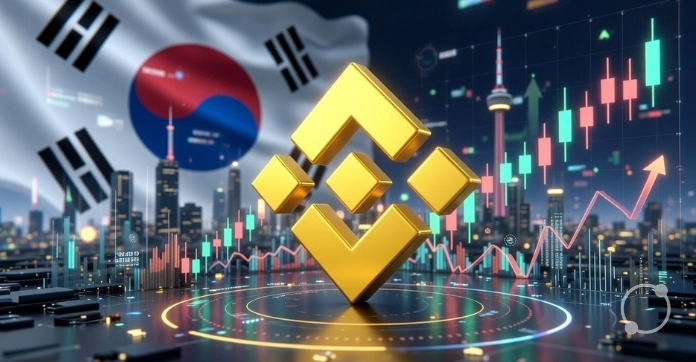
Binance is strengthening its presence in South Korea through GOPAX ahead of anticipated regulatory reforms scheduled for 2026.
According to a report by The Korea Times, the move signals a longer-term commitment focused on institutional adoption, payment infrastructure, and regulated stablecoin settlement.
Binance Expands Into South Korea Via Gopax
SB Seker, Binance’s head of Asia-Pacific, said institutional demand has become one of the most significant drivers of global crypto market growth.
“Twenty-three percent of last year’s global market growth came from institutional adoption,” Seker said in a video interview with The Korea Times. “If Korea advances on the regulatory side, the growth trend could be similar, or potentially stronger.”
His remarks come as South Korea’s regulatory stance begins to shift. Authorities recently lifted a nine-year restriction that prevented corporations from holding or investing in crypto assets. Lawmakers are also preparing the second phase of national digital asset legislation, tentatively titled the Digital Asset Basic Act, with a target implementation year of 2026.
For Binance, the timing matters.
The exchange views regulatory clarity as the missing link preventing Korean institutions from entering the market at scale. Seker said once clearer rules are in place, domestic companies are expected to begin allocating crypto assets to their balance sheets while managing exposure across multiple exchanges.
Beyond spot trading and retail-focused services, Binance plans to build institutional-grade infrastructure inside Korea. That includes systems for corporate treasury management, custody coordination, and cross-border stablecoin settlement.
The goal is to prepare the market for participation before regulations formally open the door.
Payments form another central pillar of the plan. While crypto-linked payments and remittances remain restricted for Korean residents, Binance is exploring partnerships with licensed local payment providers. The intention is to support onshore crypto transactions for overseas visitors, a limited use case that the company believes could demonstrate compliance viability to regulators.
Seker described such partnerships as a practical step that could help regulators assess real-world functionality without exposing domestic consumers to regulatory risk.
The expansion strategy runs parallel to unresolved legacy issues tied to GOPAX’s past operations.
GOPAX offered an interest-bearing product known as GOFi, which allowed customers to deposit crypto in exchange for yield. Following the collapse of FTX in 2022, approximately 1,000 bitcoins linked to customer deposits were frozen, leaving investors unable to access their funds.
In 2023, Binance acquired GOPAX under conditions that included assuming responsibility for debts associated with the GOFi product. Regulatory approval for the change in executive control was granted last October, which allowed the process to move forward formally.
On Thursday, GOPAX disclosed the establishment of a cryptocurrency wallet held with a third-party custodian to support compensation for affected investors. The wallet currently contains digital assets valued at approximately 130 billion won, or about $90.5 million.
Seker said the disclosure was intended to demonstrate transparency and reinforce confidence in the firm’s repayment commitment.
“What we’ve done is to show clearly that the intention is there,” he said.
However, the remaining steps involve complex legal and administrative procedures. Under Korean law, repayment must be processed through GOPAX’s balance sheet. That requirement means Binance must inject capital into the exchange before compensation can be distributed.
Seker also pointed to execution costs tied to converting digital assets into fiat currency and then redistributing funds to creditors. Market liquidity and asset prices at the time of conversion may influence final repayment amounts.
Binance says it is working to reduce those costs while securing approval from GOPAX’s minority shareholders, a process that remains ongoing.
“It’s taken three years to complete the change of control,” Seker said. “There are still administrative steps ahead. Once those are complete, we can return the business to baseline and move forward fully.”
Also Read: Bank of Bahrain and Kuwait Integrates Binance as Crypto-as-a-Service