
What To Know:
- Vitalik Buterin’s support for ZKsync boosted attention around the Layer 2 network, briefly driving its token price up by over 150%.
- ZKsync’s new Atlas upgrade aims to improve liquidity flow, transaction speed, and scalability across Ethereum-based chains.
- Despite rising developer and institutional interest, daily user activity and token value remain relatively low.
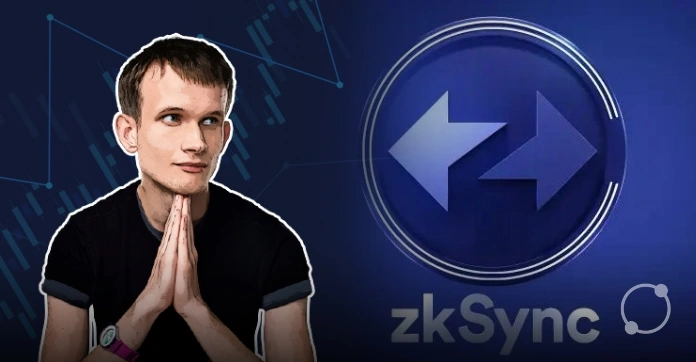
Ethereum co-founder Vitalik Buterin’s recent public support for ZKsync has reignited attention around the Layer 2 ecosystem, however the crypto continues to stay low on price value. The endorsement, however, did trigger a sharp rise in ZKsync’s token activity.
The wave began on November 1, when ZKsync co-founder Alex Gluchowski shared a post titled “Ethereum is now the main capital hub of ZKsync.” Buterin reposted it, commending ZKsync for its consistent technical contributions to Ethereum and expressing optimism about its upcoming upgrade, known as Atlas.
ZKsync Amid Pressure after a Brief Rise Triggered By Vitalik Buterin’s Post
In a recent post on X, Buterin summed up his view simply: “ZKsync has been doing a lot of underrated and valuable work in the Ethereum ecosystem. Excited to see this come from them.” His remarks quickly gained traction across the crypto community, pushing ZKsync’s token up by over 150% before correcting later in the week. On November 03, it reached the trading value of $0.0726.
ZKsync has been doing a lot of underrated and valuable work in the ethereum ecosystem. Excited to see this come from them! https://t.co/coZKCfsb8h
— vitalik.eth (@VitalikButerin) November 1, 2025
But, it is worth mentioning that ZKsync’s recent pace is not solely owing to Buterin’s tweet. The project has been developing a range of infrastructure upgrades designed to improve liquidity flow, scalability, and transaction speed across Ethereum-based networks. The Atlas upgrade, its latest initiative, positions Ethereum as the central liquidity hub for ZKsync-based chains. This means projects built on ZKsync can directly access Ethereum’s liquidity without relying on separate pools, improving transaction efficiency and settlement speed.
The upgrade also introduces major performance improvements. ZKsync developers claim it will enable over 15,000 transactions per second, near-zero fees, and one-second finality for on-chain transactions. This performance level brings Ethereum closer to real-time financial settlement, which makes it more competitive with centralized systems in speed and cost.
An equally important factor is ZKsync’s effort to incorporate multiple Layer 2 networks through its ZK Gateway middleware. The tool allows instant communication between ZK-powered blockchains, reducing delays and improving interoperability. If proven successful, this could unify Ethereum’s fragmented Layer 2 area into a more connected network of applications and liquidity sources.
Apart from the tech, ZKsync is also expanding its footprint into institutional services. As per ZKsync, more than 30 financial institutions, i.e., Citibank, Deutsche Bank, and Mastercard, have joined the network since its launch.
Zero-knowledge proof tech remains at the center of this progress. ZK prrofs was once limited to academic research, but now being integrated into mainstream blockchain infrastructure. A recent report by a16z crypto revealed that Ethereum Layer 2 solutions, many powered by ZK technology, have helped cut average transaction costs to below one cent. This was done even as the overall throughput by 100 times increased over the past five years.
ZKsync’s adoption data, however, paints a mixed picture. The number of active addresses on the network has risen by 26% in the past month. But daily active users remain around 10,400, ranking it 60th among Ethereum-based blockchains. This suggests that even as developer and institutional interest is rising, retail engagement is still limited.
In terms of total value locked (TVL), ZKsync’s mainnet currently holds about $44.5 million. Yet, across its broader Elastic Network, which spans 18 connected chains, the combined TVL goes beyond $3.3 billion. This indicates that ZKsync’s influence extends beyond its native chain, serving as a backend infrastructure provider for multiple Layer 2 ecosystems.
Buterin’s public support did manage to reinforce confidence in ZKsync’s long-term strategy. The project is currently positioning itself as a core pillar of Ethereum’s scalability roadmap. While its native crypto remains under pressure amid a wider market dip, ZKsync’s progress highlights how Layer 2 innovation continues to push Ethereum toward institutional-scale adoption.
Also Read: Vitalik Buterin Calls for Verifiable Silicon Hardware For Blockchain