- Gemini tops Coinbase in U.S. App Store after XRP Mastercard launch sparks strong market attention.
- Ripple CEO praises the new XRP credit card, calling it a milestone for adoption and community growth.
- IPO filing places Gemini in investor spotlight though Coinbase still leads global exchange volumes.
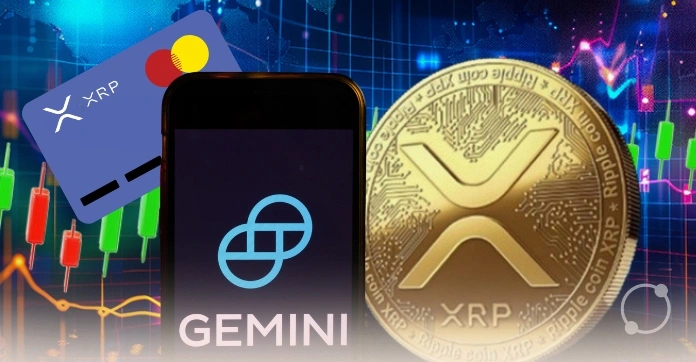
Gemini, the crypto exchange founded by Tyler and Cameron Winklevoss, has overtaken Coinbase in Apple’s U.S. App Store finance rankings. The leap followed the launch of its XRP-rewards Mastercard, built in partnership with Ripple Labs and Mastercard.
The sleek, limited-edition metal card offers up to 4% cashback in XRP instantly—an incentive that generated major buzz across social media. According to Sensor Tower, Gemini climbed to 16th in the finance category, while Coinbase slipped to 20th.
Later figures from App Store intelligence platform App Tweak pushed Gemini as high as 10th, with Coinbase down at 25th.
Market Reactions Highlight Shift
Gemini co-founder Tyler Winklevoss seized the moment, declaring on X that “the flippening is accelerating.” Ripple Labs CEO Brad Garlinghouse echoed the enthusiasm, saying, “An XRP rewards credit card out in the world?! What a time to be alive, XRP family.”
While Coinbase remains a dominant player by trading volume, the symbolic nature of the shift struck a chord in crypto circles. Coinbase processed $4.54 billion in trades over 24 hours, compared to Gemini’s $382.49 million, CoinMarketCap data shows.
Still, App Store placement matters in attracting new users, as rankings are shaped by downloads, reviews, app performance, and retention. The move also reignited debates on whether flashy incentives like crypto-linked credit cards can genuinely drive user growth or if they offer only short-term hype.
IPO Plans Add to Spotlight
Gemini’s rise comes just weeks after filing with the U.S. Securities and Exchange Commission to list its Class A common stock on the Nasdaq under the ticker GEMI. The offering will be led by major banks, including Goldman Sachs, Morgan Stanley, and Citigroup.
If given the green light, Gemini would be initiating public trading for the first time. Even though the pricing range isn’t made public, it seems that Gemini is aiming to be among the top-tier publicly listed digital asset firms.
Having this happen at the same time as the XRP card launch could potentially increase brand recognition prior to the IPO. On the other hand, Coinbase has been publicly listed since 2021 and has cultivated a reputation as the trusted exchange for millions of users.
For a lot of users, the Coinbase stability is preferred over the lure of Gemini’s newest features. However, Gemini’s strong jump into consumer finance and payment rail expansion, including USD payment integrations for European institutions, indicates their desire to move beyond their current niche.
Can Gemini Convert Hype Into Market Share?
The critical question is whether Gemini can leverage the momentum of its App Store into lasting growth. Analysts point out that app charts are quick to respond to new releases and marketing campaigns, but keeping up with user action requires stronger app features.
Coinbase’s daily volume being triple that of its competitors shows established market dominance and the difficulties challengers face. Within the constraints of the finance world, Gemini is one of the only players to step outside the box and look for a different narrative to tell investors.
Connecting rewards to the third-largest cryptocurrency by market capitalization, XRP, the company taps into some of the most passionate digital asset communities. The XRP Mastercard is a combat tool and a community tool for Gemini because it helps them gain users and makes a statement at the same time.
As the IPO looms, Gemini’s visibility has rarely been higher. The company now stands at a crossroads: will the buzz around its credit card and App Store victory drive lasting adoption, or will Coinbase’s liquidity edge and long-term reputation keep it firmly ahead?
For now, Gemini has claimed a symbolic win in the battle for attention—a reminder that in crypto, perception can be just as powerful as volume.