What To Know:
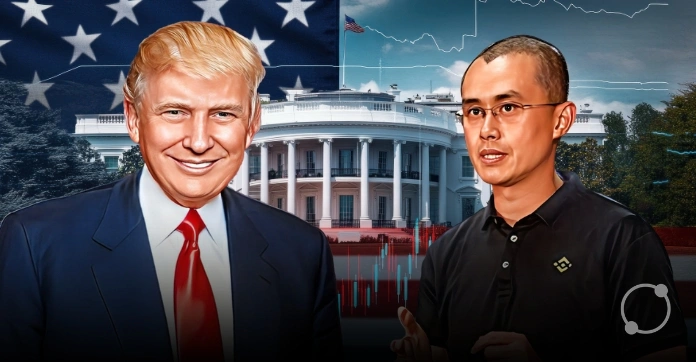
- The White House said former President Donald Trump’s pardon of Binance’s Changpeng Zhao went through a “thorough and serious” review.
- Trump defended the decision in a 60 Minutes interview, calling Zhao’s prosecution a “Biden witch hunt,” while Press Secretary Karoline Leavitt clarified Trump didn’t know Zhao personally.
- The pardon has drawn scrutiny over possible political and financial ties.
The White House has reportedly defended President Donald Trump’s decision to pardon Binance founder Changpeng Zhao, saying the review process was met with “utmost seriousness”. The White House also said that the case followed standard procedures involving the Department of Justice and the White House Counsel’s Office.
Trump’s Pardon of Changpeng Zhao
Press Secretary Karoline Leavitt, addressing reporters on Tuesday, said the decision underwent “a thorough legal review before it reached the president’s desk.” She added that the pardon showed the administration’s belief that Zhao had been “over-prosecuted by a weaponized DOJ.” This echoes Trump’s repeated criticisms of his predecessor’s handling of crypto-related issues.
The comments came two days after Trump’s interview on 60 Minutes, where he said he did not know who Zhao was and called the prosecution a “Biden witch hunt.” When asked about the remark, Leavitt said that Trump meant he had no personal relationship with Zhao, not that he was unaware of the case.
Zhao’s pardon has quickly become one of the most debated decisions of Trump’s presidency. It revived tensions between regulators, political observers, and the crypto industry, which continues to wrestle with questions of accountability and political favoritism.
Zhao, known globally as “CZ,” pleaded guilty in late 2023 to failing to maintain an effective anti-money laundering program at Binance. He served a four-month sentence and paid a $200 million fine. The company itself paid more than $4 billion in penalties to US authorities after a long investigation into its compliance failures.
The US Treasury and Justice Department had accused Binance of allowing transactions linked to hackers, terrorist groups, and sanctioned entities. Then–Attorney General Merrick Garland said Binance had grown into the world’s largest exchange “in part because of the crimes it committed,” calling the penalty one of the largest corporate settlements in American history.
Trump’s pardon, issued last month, wiped Zhao’s record clean and restored his right to conduct business in the US. The move met with mixed reactions, appreciation from crypto investors and criticism from legal experts and political analysts Critics argue it hints at leniency toward wealthy offenders, meanwhile, supporters say it corrects an overreach by a government hostile to crypto industry.
The pardon also reignited scrutiny over Trump’s personal and financial ties to the crypto industry. His family’s digital asset firm, World Liberty Financial, reportedly relies on Binance’s infrastructure for its exchange operations. Earlier this year, the Wall Street Journal reported that the firm had explored acquiring a stake in Binance.US, though World Liberty later denied the report.
Lobbying disclosures show that Binance paid $450,000 to a firm connected to Donald Trump Jr. during the same period Zhao’s pardon was under review. The payments were described as discussions on “cryptocurrency policy and executive clemency.”
Leavitt dismissed any suggestion that financial ties influenced the pardon decision, saying the process was conducted by the book. She reiterated that the decision was rooted in Trump’s view that Zhao’s prosecution reflected an anti-crypto bias.
“There were no fraud charges, no victims, and no evidence of theft or misappropriation,” she said. “The president’s decision was based on fairness.”
The pardon also brought to light the Trump administration’s growing alignment with the crypto industry. Since returning to office, Trump has positioned himself as a supporter of crypto, often contrasting his stance with what he calls “regulatory hostility” under previous leadership.
Crypto entrepreneurs, including Tron founder Justin Sun, have also benefited from recent policy changes. The SEC dropped its civil fraud case against Sun earlier this year after he made substantial investments in Trump-affiliated ventures.
Zhao, who has kept a low profile since his release, issued a short statement on social media thanking supporters, saying he wants to focus on “building transparent, compliant infrastructure for the future of digital finance.”
Also Read: Changpeng Zhao (CZ) Climbs Hurun Rich List Amid Trump Pardon News