
What To Know:
- Presidential candidate Renan Santos has proposed a national Bitcoin reserve, presenting it as a step toward financial sovereignty rather than a speculative policy.
- The idea has already entered Brazil’s policy debate, following a 2024 congressional hearing on a draft bill to add Bitcoin to national reserves.
- Santos’ proposal draws inspiration from El Salvador’s Bitcoin strategy, as crypto gains attention across Brazil’s political and financial sectors.
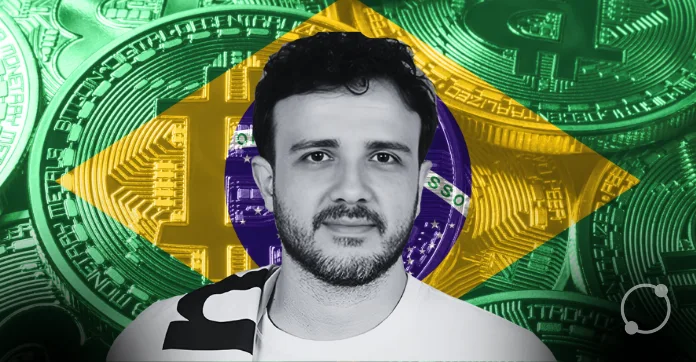
Brazil’s next presidential election is beginning to highlight a proposal integrating Bitcoin with political ambition. Renan Santos, a presidential candidate and founder of the Missão Party, has publicly argued that Brazil should consider building a national Bitcoin reserve, framing the idea as a practical step rather than a speculative gamble.
Brazil Proposes Bitcoin Reserve Plan
Santos said in a recent podcast that the concept is already taking shape elsewhere and could be gradually adapted for Brazil. He cited El Salvador’s experience as proof that governments can hold Bitcoin as part of a global monetary strategy. As Santos put it, the idea reflects a belief that financial sovereignty today extends beyond traditional reserves such as gold and foreign currency.
Santos, both a political activist and a co-founder of the Free Brazil Movement, has a platform tied to Bitcoin through his political rhetoric. He says Bitcoin and blockchain technology could help address long-standing weaknesses in Brazil’s public institutions, particularly in relation to transparency and accountability. Blockchain systems offer a way to reduce opportunities for mismanagement by creating verifiable and traceable records, Santos said. The idea of a strategic Bitcoin reserve has already entered Brazil’s legislative arena.
In 2024, Congress hosted a public hearing on the subject after pro-crypto lawmaker Eros Biondini introduced a draft bill proposing that the national treasury begin acquiring Bitcoin and other digital assets classified as secure. While the bill has not advanced into law, it marked a turning point by placing Bitcoin into formal policy debate.
Brazil heads to the polls on October 4, with voters set to elect a president, vice president, and members of the National Congress. Santos launched the Missão Party in 2023 and secured its official registration in November. His campaign has been built in opposition to the current political heavyweights, including incumbent President Luiz Inácio Lula da Silva and Flávio Bolsonaro, son of former president Jair Bolsonaro.
Santos has repeatedly cited El Salvador’s President Nayib Bukele as an influence, praising his economic direction and approach to state authority. El Salvador became the first country to adopt Bitcoin as legal tender in 2021 and has continued to accumulate the asset through daily purchases. As of December 2025, the country reportedly holds more than 7,500 Bitcoin, valued at over $679 million based on prevailing market prices.
El Salvador, meanwhile, has indicated its commitment to Bitcoin remains firm entering 2026. On January 1, the country’s National Bitcoin Office said that Bitcoin and artificial intelligence would be central to the plan for a national strategy in the longer term. The policy continuity has received scrutiny across Latin America, including in Brazil where policymakers and private bodies are beginning to scrutinize digital assets.
Santos has further defended the power of blockchain to tackle corruption by referring to it as a practical tool for the public sector. He contended that open ledgers might make it harder to steal money by exposing the financial flows now obscured by bureaucratic networks. In another area of policy, including national defense and foreign relations, the candidate has not been squeamish about causing controversy. He first provoked a backlash early in the year by proposing Brazil should pursue nuclear weapons as a deterrent against international actions involving Venezuela. He cast the position in terms of sovereignty and national security.
Beyond politics, interest in Bitcoin is growing within Brazil’s financial sector. In December, an analyst at the country’s largest bank advised clients to allocate a small portion of their savings to Bitcoin or Bitcoin exchange-traded funds.
Also Read: Skepticism Grows Over Claims Venezuela Holds 600,000 Bitcoin