
Bitcoin took a rather unexpected hit last week, dropping 3.12% to finish last across all major asset classes. What makes it strange is that the macro data looked quite promising in theory. July’s inflation was 0.1 per cent month on month and retail sales saw their biggest drop since May 2025. However by Friday, the market had cut the likelihood that a September rate hike was going to be roughly even to about one in three. On paper, this is exactly the kind of setup Bitcoin holders wait for, but the week ended with a whimper, and the market response wasn’t favourable.
Wintermute’s weekly market report for August 17 was quite blunt about what that drop meant. According to them, these last five trading days were the first real test for Bitcoin under these conditions, and it just did not pass it.
The ETF Bid Lasted Exactly One Week
US spot Bitcoin ETFs saw net outflows of roughly $390 million between August 10 and 14, which is the heaviest weekly redemption since June, given that this came directly after their best inflow week since April. BlackRock’s IBIT has absorbed most of the selling. Ether funds finished close to flat over the same period, which had snapped a five-week run of inflows.
The speed of that reversal hints that a lot of the early-August buying was opportunistic instead of structural re-engagement which would actually be useful in supporting a sustained move higher. Wintermute had been looking for exactly that kind of evidence but did not get it.
However, not every product bled right through. Solana ETFs pulled in around $10 million for their best week since May, and both XRP and Hyperliquid wrappers finished “modestly positive.” At those sizes the story reads more like a signal of interest rather than a genuine flow, but it does suggest that the selling was concentrated in Bitcoin specifically instead of being spread across the asset class.
Riot’s Second Quarter Puts a Name on the Seller
The most substantial evidence of who has been selling originated from a miner’s balance sheet rather than from the ETF data. Riot Platforms disclosed that it sold 4,300 BTC during the second quarter, on top of 3,778 in the first, which brought its treasury down to 11,380 BTC.
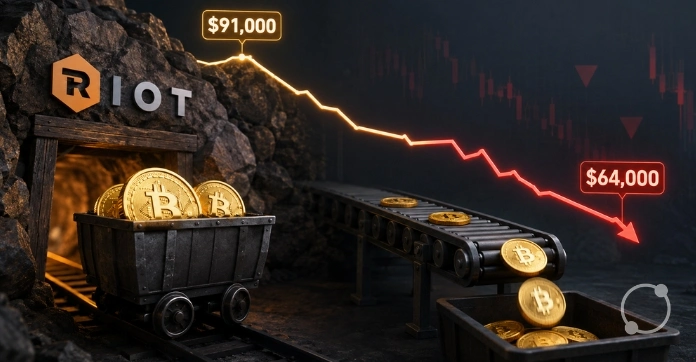
What makes those numbers interesting is the cost side of things. Riot’s all-in cost to mine a single coin was close to $91,000 during the quarter, all while the coin itself was worth under $64,000. Naturally, this is the gap that drove a $237 million quarterly loss.
However, Riot is not an unusual case here. Network hashrate is sitting at record highs, which means the mining sector as a whole is currently producing coins that cost more to make than they sell for. And to close this said gap, miners generally go about it in one of two ways. They either sell treasury holdings to cover operating costs, or they sell them to fund a pivot into AI data centre revenue. As of now, Riot is doing both after signing a 191MW leasing deal.
Wintermute expects this to continue for as long as production costs sit above spot, since miner treasuries hold a meaningful amount of supply. Moreover, it believes that some portion of it naturally reaches the market each quarter.
Why the Rate Story Stopped Doing Any Work
The cross-asset picture from last week further explains why falling hike odds did not translate into a bid for anything. Brent crude topped the table with a 7.91% gain as conditions around the Strait of Hormuz deteriorated, and only five ships crossed the strait on Saturday with none at all on Sunday, in contrast to the number in the previous week was recorded to be 31.
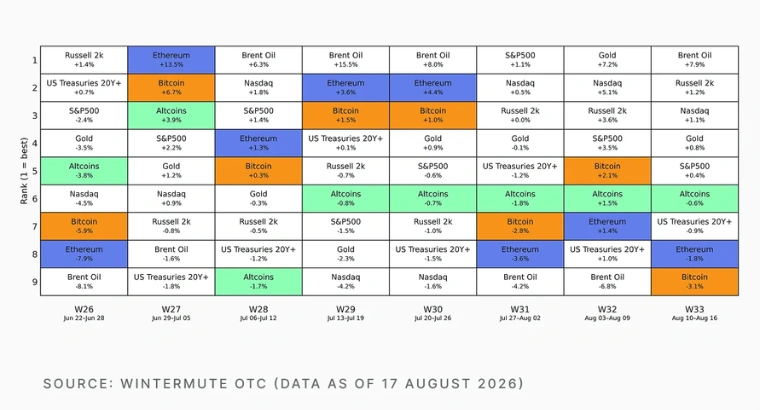
Equities barely held green, with the S&P 500 up 0.40% and the Russell 2000 leading at 1.17%, while everything rate-sensitive finished lower, including 20-year-plus Treasuries at minus 0.87%. When collapsing hike odds cannot lift either bonds or crypto, which suggests that the inflation problem has moved out of the Federal Reserve’s hands and jumped into oil’s.
This is rather crucial because energy did most of the disinflation work through June and July. If Brent holds anywhere near $89, the August CPI print is at risk, and with it the whole assumption that the Fed is finished.
There was one genuinely positive development in the week, which came from stablecoins as opposed to Bitcoin. KPMG completed the first full audit of Tether’s financial statements with an unqualified opinion, showing reserves exceeding liabilities by $6.8 billion, and the engagement extended as far as physically counting the gold. For a liability stack of around $180 billion, that should remove at least some institutional hesitancy about settling over USDT rails.
The week ahead brings FOMC minutes on Wednesday and flash PMIs on Friday. This will be followed by Jackson Hole from August 27, ceasefire expiry is sure to make headlines all the way through.