
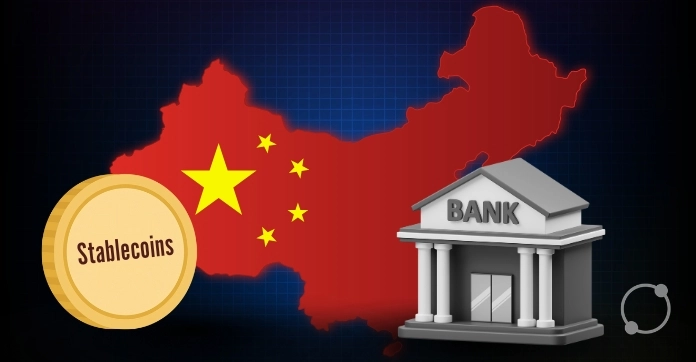
What To Know:
- Ex Bank of China VP, Wang Yongli says China will push the digital yuan while clamping down on crypto and stablecoins.
- He views stablecoins as a risk to monetary sovereignty and financial security.
- He called for expanded e-CNY adoption, cross-border oversight, and resistance to dollar-backed models.
In a new article, former Bank of China vice president Wang Yongli argues that China has made a clear and deliberate policy decision: push forward with the expansion of the digital yuan while tightening restrictions on virtual assets, particularly stablecoins. He frames the approach as one driven by national security, monetary sovereignty, and the need to uphold financial stability.
China’s Policy Orientation for Cryptos, Stablecoins Is Fully Clear
Wang argues that China’s advantage in mobile payments and its progress on a central bank digital currency remove any practical need to follow the dollar-centered stablecoin model. He points to the global dominance of US dollar stablecoins, the uneven incentives behind US legislation, and the financial risks that stablecoins can introduce into cross-border capital flows. For Beijing, he writes, the risk is structural and strategic.
The spread of dollar-linked stablecoins has created a near-monopoly in crypto markets. That market structure concentrates liquidity and influence in vehicles denominated in US dollars. China, Wang suggests, would cede control over payment rails and capital movement if it permitted an unfettered stablecoin market to develop under foreign-dominated infrastructure. International law, geopolitics and realities of financial surveillance make that a national security concern.
Wang also critiques the US legislative approach. He says recent laws strengthen the compliance and stability of dollar stablecoins but primarily serve American economic priorities. Those rules, he contends, aim to expand global demand for the dollar and to channel asset flows toward US Treasuries and regulated institutions. For other countries, he warns, the result may be increased exposure to US monetary influence rather than a level playing field.
Beyond geopolitics, Wang highlights operational and regulatory challenges. A legal framework for stablecoins, he notes, raises questions about reserve adequacy, audit consistency and the practicalities of enforcing anti-money laundering and know-your-customer rules in a 24/7 cross-border market. Compliance costs rise, market structures shift, and traditional banks may eventually replace unregulated intermediaries by tokenizing deposits and offering on-chain services. The effect could be to erode the current unregulated ecosystem and transfer systemic functions into the regulated banking sector.
Wang is blunt about domestic risks. He links crypto markets and stablecoins to cases of fraud, money laundering and illicit capital flight. He emphasizes the difficulty of reconciling anonymous, high-frequency on-chain transfers with transparency demands in financial supervision. For a country focused on monetary control and foreign exchange stability, those dynamics are intolerable.
The People’s Bank of China has moved to clarify the role of the digital yuan in the monetary system. It adjusted the central bank’s accounting and management arrangements, and created operational centers to oversee domestic and cross-border use. At the same time, the PBOC and other agencies have reiterated a prohibitive stance on virtual currency issuance and trading. Joint enforcement meetings in late 2025 stressed that stablecoins are a form of virtual currency and therefore subject to cracking down.
Critics argue that Beijing’s approach limits financial innovation and could isolate China from certain global crypto initiatives. Supporters counter that the digital yuan offers a controlled, sovereign path to digitalization without sacrificing regulatory oversight. Wang sides with the latter view and urges China to double down on the digital yuan while strengthening legal and operational controls to prevent illicit activity.
His prescription is specific. Tighten surveillance of cross-border flows. Strengthen interagency information sharing. Accelerate adoption of the digital yuan in domestic payments and international settlement pilots. Resist the temptation to replicate a dollar-based stablecoin model that, in his view, would offer little strategic benefit.
The debate is likely to shape global digital currency policy. For Beijing the calculus is clear, which is to preserve monetary sovereignty, protect financial stability and use the digital yuan to build a secure, state-led alternative to private stablecoins.
Also Read: China’s Bitcoin Mining Game Quietly Rebounds Despite 2021 Ban