What to Know:
- Ghana Parliament approved the Virtual Asset Service Providers Bill, creating a legal framework to license and supervise crypto exchanges and wallet providers.
- Around 3 million Ghanaians, nearly 17% of the adult population, are estimated to use cryptocurrencies.
- Sandbox and AML rules aim to balance control and innovation: The framework introduces capital and anti-money laundering requirements, limits operations to licensed firms.
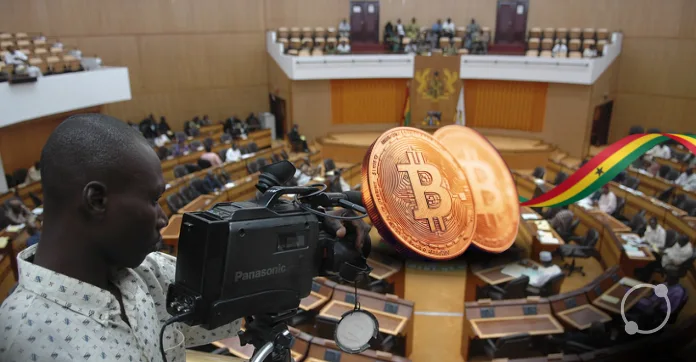
Ghana has taken a key step toward formally controlling cryptocurrency assets after parliament approved legislation to legalize and regulate crypto activity in the country. The move follows growing concern from monetary authorities over the scale of unregulated crypto use and its potential impact on financial stability, particularly the management of the cedi.
Ghana Legalizes Bitcoin and Crypto Trading
As per reports, the newly passed Virtual Asset Service Providers Bill has introduced a legal guide for licensing crypto exchanges, wallet providers and other virtual asset firms. Governor Johnson Asiama, the head of the Bank of Ghana, said in Accra over the weekend that the law would enable regulators to oversee an activity that was growing fast outside formal controls. The central bank has been pressured to react as the country’s crypto adoption has expanded across the economy.
It is estimated that around 3 million Ghanaians – or just around 17% of the adult population – currently make cryptocurrency transactions. That level of involvement has alarmed the policy-makers, as there is no consistent reporting process, consumer protections and capital requirements. Officials have also raised concerns about the implications for currency management in a country facing ongoing strain on its foreign exchange reserves. Asiama said the legislation would establish “clear, accountable, and well-governed boundaries” for the new crypto trade. Proper oversight would also help cut costs for banks, improve customer experience and enable small and medium enterprises engaged in trade and payments, he said.
The central bank sees the framework as a way to channel any existing demand into a regulated environment instead of allowing parallel systems to balloon out of control. Data on transaction volumes illustrates the urgency of the decision. According to estimates from Web3 Africa Group, crypto transactions in Ghana reached about $3 billion in the year through June 2024. That does not come close to Nigeria’s $59 billion over the same period, but it still ranks Ghana among the more active crypto markets in sub-Saharan Africa, which posted an estimated $125 billion in total volume.
On the same view, Chainalysis data from July 2023 to June 2024 shows a parallel story. Chainalysis shows evidence of a similar trend continuing to increase from July 2023 to June 2024, indicating crypto activity has already grown to a point at which the regulation has been on a scale such that “cryptocurrency trading is beyond the level of being difficult for the industry to comprehend and regulatory frameworks to navigate and be open.
Without rules, authorities have cautioned that risks associated with fraud, illicit finance and user losses may increase, and the adoption can follow suit. The act establishes requirements for registration, capital adequacy and anti-money laundering regulations. Only licensed exchanges and wallet providers will be allowed to operate in compliance with the framework once the framework is in place.
Officials say this approach is intended to bring Ghana into line with international standards, and to limit the impact of the country’s risks of being flagged by global watchdogs like the Financial Action Task Force, officials said.
Global exchanges including Binance have also encouraged local development of stablecoins in African markets, especially those using local currency or connected to payment purposes.
Ghana’s approach shows it is open to innovation, if it happens within bounds. Binance’s Africa head of legal, Larry Cooke, said Ghana had an opportunity to show what balanced digital asset laws might look like when they were backed by consistent action from regulators and a strong infrastructure. He noted instances in other African markets where exchanges have already introduced know-your-customer standards, educational initiatives and fraud prevention tools ahead of formal mandates.
In Kenya, a similar alignment between regulators, industry groups, and exchanges has guided draft virtual asset legislation.
Also Read: New Crypto Regulation in UK to Treat Crypto Assets Like Stocks