What To Know:
- Sam Bankman-Fried compared the treatment of Venezuela’s Nicolás Maduro and former Honduran president Juan Orlando Hernández.
- He argued that US institutions and Western media apply selective standards shaped by politics rather than consistent legal reasoning.
- He claimed media outlets questioned the legality of U.S. actions against Maduro while remaining largely silent when Hernández was arrested in Honduras.
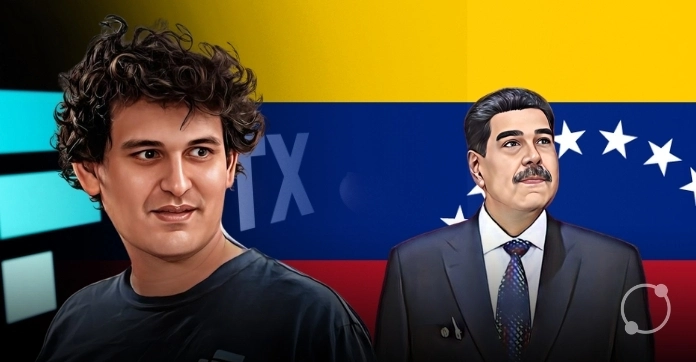
Sam Bankman-Fried (aka SBF), the jailed founder of collapsed crypto exchange FTX, has drawn parallels between Venezuelan President Nicolás Maduro and former Honduran President Juan Orlando Hernández. In a series of posts, Bankman-Fried accused U.S. institutions and Western media outlets of applying selective standards when judging arrests, extraditions, and questions of legality in Latin America.
SBF Contrasts Maduro with Former Honduran Prez
[SBF says:]
1) A tale of two Presidents pic.twitter.com/8WIhK6mlJh
— SBF (@SBF_FTX) January 6, 2026
SBF’s comments came as Venezuela once again became the focus of U.S. enforcement actions and geopolitical tension. Writing on X, he argued that both Maduro and Hernández governed countries deeply affected by narcotics trafficking, but received sharply different treatment in global media narratives. In his telling, those differences had less to do with law and more to do with politics.
He noted that Hernández, commonly referred to as JOH, cooperated closely with U.S. authorities during his presidency. According to Bankman-Fried, drug trafficking levels fell during that period, and Hernández stepped down peacefully when his term ended. Shortly afterward, U.S. authorities arrested him in Honduras and extradited him to face charges in New York. Hernández has since been convicted on drug trafficking charges.
Maduro, Bankman-Fried wrote, followed a different path. He accused the Venezuelan leader of working with drug cartels, ignoring election results, and consolidating power. When U.S. authorities moved against Maduro, including indictments filed in New York, Bankman-Fried argued that Western media coverage shifted tone. Outlets that criticized the legality of U.S. actions against Maduro, he said, failed to raise similar objections in the case of Hernández.
In one post, SBF cited multiple headlines from major US newspapers questioning Washington’s authority to pursue Maduro. He compared that coverage with what he described as silence when Hernández was arrested and transferred to the US after leaving office. The discrepancy, he argued, revealed editorial choices shaped by political alignment rather than consistent legal reasoning.
SBF went further, accusing liberal media outlets of supporting Maduro’s position while opposing Hernández because of their respective relationships with former President Donald Trump. He claimed Maduro benefited from opposition to Trump-era foreign policy, while Hernández was treated harshly because Trump later pardoned him. In Bankman-Fried’s framing, the issue reflected narrative preferences rather than legal principles.
The comments arrived against the backdrop of long-standing U.S. accusations against Maduro.
In 2020, federal prosecutors from New York charged the president of Venezuela with narco-terrorism conspiracy, cocaine importation conspiracy, and weapons-related offenses. Maduro was cited as a key orchestrator of heavy shipping of cocaine to the United States over decades, the indictment said. The charges also identified members of his circle which included family members and senior officials and sought forfeiture of assets tied to the alleged conspiracy.
Former President Trump publicly labeled Maduro a leader of a criminal organization that has flooded the United States with drugs. Those statements added to Washington’s tough stand on Venezuela, which continues to be heavily sanctioned.
Recent news about his arrest was also rippling through financial markets. News relating to his arrest led to an overnight spike in crypto prices, with Bitcoin soaring briefly to around $93,000. That volatility opened up renewed speculation that Venezuela may hold a sizable, undisclosed Bitcoin holding. That claim came back to the fore when the investigative journalist Bradley Hope pointed out that the country might control 600,000 Bitcoin—worth as much as $60 billion. The theory argues that Venezuela converted gold reserves to Bitcoin over a number of years to avoid sanctions.