What To Know:
- Claims that Venezuela holds up to 600,000 BTC stem from estimates tied to past gold sales, but leading blockchain analytics firms say there is no on-chain evidence linking wallets of that scale to the Venezuelan state.
- Analysts including Whale Alert’s Frank Weert argue that concealing hundreds of thousands of Bitcoin would be extremely difficult, even for a sanctioned government.
- While Venezuela has actively used crypto for state initiatives and civilian adoption amid inflation and sanctions, its actual government-held Bitcoin reserves remain opaque and unconfirmed.
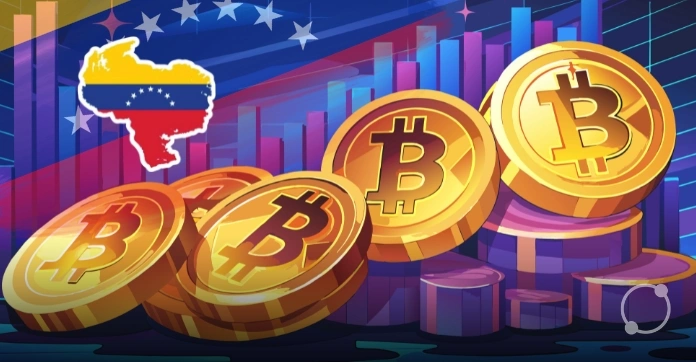
US pressure on Venezuela’s leadership has brought to surface the long-standing claim: that the Maduro government may be having a vast, undisclosed Bitcoin reserve. The allegation, which was around for years in different forms, gained fresh attention after investigative journalist Bradley Hope suggested that Venezuela could hold as much as 600,000 Bitcoin, an amount worth roughly $60 billion at current market prices.
Does Venezuela have a $600K Bitcoin Reserve
Maduro was captured this morning. Delta Force dragged him from his bedroom in Caracas.
But here’s the question intelligence agencies are asking: Where’s the $60 billion?
For years, the regime converted looted gold into Bitcoin. The man who built that system isn’t on the ship to… pic.twitter.com/eMUh11iNCJ
— Bradley Hope (@bradleyhope) January 3, 2026
The narrative is that Venezuela clandestinely converted significant amounts of its gold reserves to Bitcoin over the years. Hope’s estimate is based on publicly available gold sales that date back to 2018, including a 73-ton sale that accounted for about 40 percent of the country’s reserves at the time. He also extrapolated the possible worth of those sales, under the assumption of a transition over to Bitcoin, to get the 600,000 BTC figure. Analysts who pay attention to the blockchain, though, continue to be unconvinced.
Those large firms that look for digital assets say they have found no on-chain evidence to support the existence of a Bitcoin stash of that magnitude linked to the Venezuelan state. Arkham, Chainalysis, and Elliptic have found no wallets in question that could credibly be attributed to government holdings anywhere near that size.
Frank Weert, co-founder of blockchain tracking service Whale Alert, expressed sharp skepticism. He said that hiding hundreds of thousands of Bitcoin would be extraordinarily difficult, even for a state actor with experience navigating sanctions. Large transfers leave patterns, and those patterns are usually visible to analysts who monitor the network closely. Claims of such scale, he said, would require compelling and verifiable proof.
Weert also cautioned against placing too much weight on smaller figures circulating online. Some trackers, like BitcoinTreasuries.net claim Venezuela is holding some 240 BTC, worth about $22 million. Even that estimate — which is not always borne out by transaction-level evidence and should be weighed cautiously, Weert said. Though their calculations are disputed, Venezuela’s interest in crypto, after all, is well proven.
Under President Nicolás Maduro, the government experimented with state-backed crypto assets long before most governments. The government’s introduction of the Petro in 2018–the nation’s national crypto tied to oil reserves–became famous. The idea was to avoid sanctions and tap into foreign capital. After six years marked by limited adoption and mounting criticism, the Petro was eventually shut down.
Beyond symbolic initiatives, crypto has played a more practical role in Venezuela’s economy. State entities have been encouraged to use digital assets for payments, particularly in oil-related and cross-border transactions. According to Ari Redbord, global head of policy at TRM Labs, Venezuela has routed some energy sales through digital wallets rather than traditional banking channels, reflecting both necessity and experimentation under sanctions pressure.
Crypto adoption has also taken place at the grassroots level. Years of hyperinflation have eroded trust in the bolívar, pushing citizens toward alternative stores of value. In 2025, Venezuela ranked among the top countries globally for cryptocurrency adoption, placing 11th in TRM Labs’ index. For many Venezuelans, crypto has served as a tool for remittances and savings rather than speculation.
Despite this backdrop, the picture of state-held crypto reserves remains murky. Platforms like Arkham do not publicly track wallets tied to the Venezuelan government. Chainalysis and Elliptic have declined to confirm the existence of large government-controlled Bitcoin holdings. Analysts say that even if such assets exist, attributing them with certainty is challenging.
Aurelie Barthere, head of research at Nansen, said there are wallet clusters linked to Venezuela, including those associated with state-aligned exchanges such as Criptolago. Still, attribution becomes difficult when funds are fragmented across unhosted wallets or routed through offshore over-the-counter brokers. These methods can obscure the ultimate destination of assets.
Barthere added that sophisticated actors may depend on techniques such as coin mixers, cross-chain swaps, and even state-controlled mining operations to generate coins without obvious histories. While advanced analytics can sometimes reconstruct these trails, they often leave room for plausible deniability unless private keys are exposed. However, for now, the claim that Venezuela holds 600,000 Bitcoin remains unproven.
Also Read: Spain Proposes New Law Increasing Taxes on Bitcoin & Other Crypto