What To Know:
- The UAE has enacted a law bringing DeFi, Web3 platforms, stablecoin systems, DEXs, and cross-chain bridges under central bank oversight for the first time.
- Federal Decree No. 6 of 2025, requires licensing for activities including payments, custody, lending, and investment services, with a compliance deadline set for September 2026.
- Projects operating without approval face penalties up to AED 1 billion ($272 million) and possible criminal consequences.
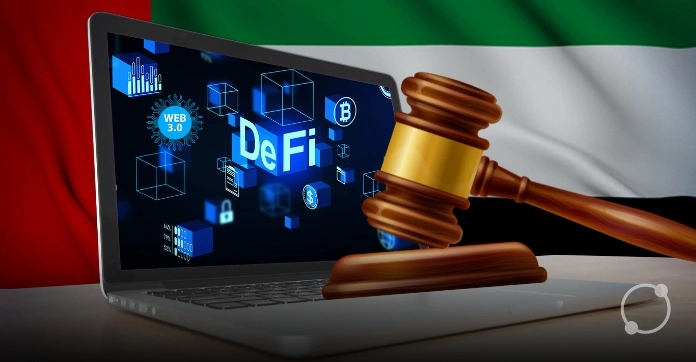
The United Arab Emirates has enacted a new financial law that places decentralized finance and a wide range of Web3 activities under direct supervision of the country’s central bank for the first time. Federal Decree No. 6 of 2025, effective since mid-September, introduces licensing requirements for projects involved in payments, custody, lending, or investment services. Companies that fail to comply by September 2026 face penalties reaching AED 1 billion, equal to about $272 million, along with possible criminal consequences.
UAE’s New Crypto Law brings Web3 under Central Bank Oversight
Local crypto lawyer Irina Heaver described the decree as one of the most consequential policy changes the region has issued for the sector. She said the law brings protocols, DeFi platforms, middleware providers, and infrastructure operators into formal scope whenever their technology enables financial activity. Industry teams building in or serving the UAE market are being encouraged to align their structures well before next year’s deadline.
The decree was published in the UAE’s Official Gazette on Sept. 16, 2025. It updates the national central bank law and applies to financial institutions, insurance companies, and digital-asset service providers. Two provisions, Article 61 and Article 62, outline the specific categories requiring a license from the Central Bank of the UAE. These include crypto payment systems, digital stored-value services, and activities conducted through any medium or technology that fall inside the bank’s remit.
Article 62 contains the broadest wording and sets the tone for enforcement. It states that any party offering or facilitating a licensed financial service through technological means falls under the central bank’s regulatory perimeter. Heaver said this closes long-standing gaps that DeFi teams previously relied on: arguments that protocols are merely “code” or that decentralization exempts them from oversight no longer apply within the UAE. Stablecoin infrastructure, real-world asset tokenization, DEX functionality, cross-chain bridges, and liquidity-routing mechanisms may now require formal authorization to continue operating legally.
Heaver added that enforcement has already begun. Projects operating without a license risk large monetary penalties and, in some cases, criminal sanctions. According to her, the new rules must be treated as a binding part of the UAE’s financial system rather than an exploratory framework.
The decree has also raised questions within the wallet sector. Because the legislation touches on stored-value services, some observers speculated that non-custodial wallets could be restricted or effectively blocked. Kokila Alagh, founder of Karm Legal Consultants, said that interpretation does not align with the text of the law. She noted that individuals remain fully allowed to use their own wallets and that the law does not interfere with self-custody practices.
The distinction lies in whether a wallet provider enables regulated services for UAE users. If a company facilitates payments, transfers, or other financial operations through its wallet interface, it may fall under the licensing rules. Alagh said her firm has received a substantial number of inquiries from organizations seeking clarity, suggesting widespread confusion across the ecosystem.
The debate intensified when Trading Strategy’s Mikko Ohtamaa argued publicly that the decree effectively imposes a ban on self-custodial wallet applications. His comments included criticism of local legal professionals, claiming they have incentives to present a favorable view of the regulatory environment. Alagh rejected that view and said her firm is engaged in active discussions with the central bank. She added that no timeline has been set for an official clarification.
The decree signals a stronger institutional posture toward crypto activity in the UAE. Developers, service providers, and investors now face a defined compliance horizon. Those that adapt early may gain an advantage in a market moving toward clearer rules, while those that do not risk heavy penalties as the licensing deadline approaches.
Also Read: India’s ARC Token Targets Early 2026 Launch Amid Stablecoin Risks