What to Know
-
WLFI, a Trump-backed crypto project, launches on Ethereum September 1 with early investors seeing up to 14× returns.
-
Token distribution and unlock mechanics include a 20% initial release via a smart contract, with the remaining 80% subject to a vote.
-
Aave token allocation dispute over governance tokens and revenue shares has stirred controversy.
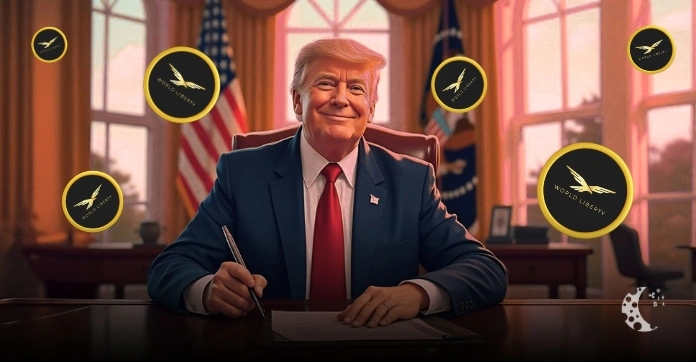
WLFI (World Liberty Financial), the crypto project backed by the Trump family, is set to make its debut on Ethereum’s mainnet on September 1, and its presale has already made crypto headlines. Early investors, who bought in private rounds at $0.015 and $0.05, are enjoying floating profits ranging from 4× to 14×, depending on their entry price, according to PANewsLab.
Ahead of launch, trading for WLFI perpetual contracts exploded prices shot as high as $0.55, implying a jaw-dropping fully diluted market cap of $55 billion. Although the price later cooled to about $0.20, those early backers are still sitting on substantial paper gains.
WLFI Token Dynamics
The WLFI token supply is capped at 100 billion tokens, and only 25% has been allocated to public presales. The official launch will unlock 20% of tokens purchased by early investors, about 5% of total supply, via a smart contract called the Lockbox. The remainder will stay locked and is set to be determined by community vote.
Exchanges like Binance, OKX, and Hyperliquid have already listed WLFI futures trading, signifying strong anticipation. Institutional heavyweights, including Justin Sun, DWF Labs, and Web3Port, have already positioned themselves in WLFI, revealing institutional-level bets on the project.
DeFi Alliance or Dispute
The project’s goals go beyond just getting people excited. A governance proposal from late 2024 said that AaveDAO would get 7% of WLFI tokens and 20% of protocol revenue in exchange for running WLFI’s lending operations on Aave v3. Stani Kulechov, the founder of Aave, said the deal was real and called it “the art of the deal.” WLFI has since called the reports “fake news,” which caused the price of the AAVE token to drop by 8%.
This conflicting story has shown that decentralized governance has some problems: even proposals that have been approved can fall apart when they are put into action because people’s interests change.
Political Capital for Trump
WLFI is more than just a crypto token; it’s also a political move. The Trump family’s support for the project gives it both star power and attention. People are worried about mixing politics with business, especially since World Liberty Financial could make a lot of money from token revenue structures, where Trump-affiliated companies get a big cut of the money.
This alignment not only brings in money right away, but it also makes WLFI a political fundraising tool in the digital age, similar to how blockchain could change the way traditional campaign donations are made. The token’s design lets it make money over and over again, which could help Trump-related projects while also appealing to his loyal supporters, who see buying into WLFI as more than just a gamble, it’s a sign of political loyalty.
Analysts say this is a double-edged sword: WLFI could be the first to bring politics and finance together in a new way, but it also risks stricter government enforcement. People are already asking questions about campaign finance laws, how easy it is to see where money is going, and whether tokens that are backed by politicians could be used as weapons to get more influence than they say they will.
Final Thoughts
WLFI’s launch in September was one of the most watched events in crypto. The event is a huge success because of the high prices and early returns, but the real test will be how fair, well-run, and trusted the community is.
If WLFI keeps its promise of decentralized governance, it could start a new and exciting chapter in DeFi. But if the arguments over token allocations, unclear governance, and political ties keep going on, it could be a warning story about putting centralized power in a decentralized space.
Also Read: BRETT Price Prediction: Can It Target $0.09 Next?