What To Know:
- Vietnam and Binance signed an MoU to support the development of Ho Chi Minh City’s International Financial Center, focusing on regulatory frameworks, sandbox design, and capacity building for crypto adoption.
- The agreement comes as Vietnam finalizes its IFC decrees and prepares to implement a strict new licensing regime for crypto exchanges.
- With over 17 million users and one of the highest crypto-adoption rates globally, Vietnam is positioning itself as a regulated crypto hub.
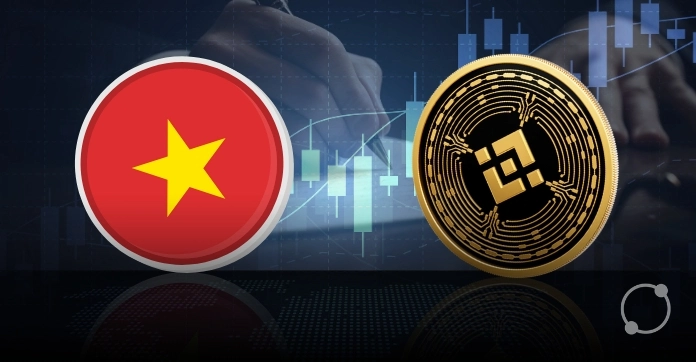
Vietnam and Binance signed a memorandum of understanding (MoU) on November 26 aimed at supporting the development of Vietnam’s International Financial Center in Ho Chi Minh City. The agreement pairs the Ho Chi Minh City Department of Finance with one of the world’s largest digital-asset firms and was formalised during the Autumn Economic Forum 2025. It sets the stage for cooperation on investor attraction, regulatory design, sandbox development, and capacity building for institutions entering the digital-asset economy.
Vietnam and Binance on a Crypto Mission
The MoU outlines several areas for collaboration. Binance will support the development of legal frameworks for crypto and blockchain, offer input on shaping a regulatory sandbox for new business models, and assist in designing initiatives for startups and SMEs that rely on digital technologies. The agreement also includes training programmes and technical workshops for regulators, policymakers and financial officials. A joint working group will manage the partnership and monitor its progress. Once the International Financial Center’s operating agency is formally established, the MoU will be transferred to that entity for implementation.
The timing adds a layer of complexity. Resolution 222/2025, the national framework governing the creation of Vietnam’s first IFCs, took effect on September 1. The Prime Minister directed that the centre begin operations in November 2025. Yet several critical components remain unfinished.
By late November, seven of the eight implementing decrees had been appraised and one was still undergoing consultation. The organisational structure was still being studied by the Ho Chi Minh City Institute for Development Studies. Without an operating agency and fully active decrees, the MoU functions more as a strategic gesture than a tool that can immediately shape the regulatory environment.
Vietnam’s IFC model includes a fintech sandbox that allows controlled testing of unregulated financial technologies, including blockchain-based services. Combined with Da Nang’s approval of the country’s first crypto-asset conversion project, demand is rising for compliance tools, custody solutions and blockchain analytics.
The country’s new licensing regime for cryptocurrency exchanges adds urgency. Resolution 5, issued in September 2025, created Vietnam’s first formal licensing pathway for exchanges. It sets requirements for custody, anti-money-laundering controls and cybersecurity. These rules introduce clearer obligations for market participants and create opportunities for specialised service providers.
Vietnam’s position in the global crypto sector plays a major role in shaping policy decisions. The country ranks among the top adopters worldwide, with more than 17 million users and annual transaction volumes estimated at over 100 billion dollars. This scale strengthens the case for developing a regulated digital-asset hub within the IFC framework. Providers of blockchain analytics, institutional-grade custody, and regulatory technology are expected to play an important role as Vietnam moves forward with its complex compliance architecture.
Beginning in January 2026, Vietnam will enforce one of the world’s strictest cryptocurrency licensing regimes. Exchanges must hold a minimum charter capital of around four hundred million dollars. Sixty-five percent must come from domestic institutional ownership, and foreign ownership is capped at forty-nine percent. Only five exchanges will be licensed during the initial five-year pilot phase.
All transactions must settle in Vietnamese dong. The model favours deep-capital firms with strong domestic partnerships, which narrows the field of viable applicants. This represents a major departure from the country’s previous regulatory condition, in which only two prohibitions existed: crypto could not be used for payments, and banks could not facilitate crypto transactions.
Vietnam’s crypto-owning population is young, with about seventy percent between the ages of eighteen and thirty-four. Combined with high transaction volumes, that demographic profile suggests a large user base but one operating within tightening regulatory boundaries. Global analyses place Vietnam in the top tier for population-adjusted crypto adoption, reinforcing its position as a high-activity market.
Also Read: KuCoin Partners with VBA and 1Matrix to Boost Web3 in Vietnam