What To Know:
- Russia began restricting Telegram on Feb. 10, with users across the country reporting widespread outages and severe service slowdowns, according to local media.
- The move fits Moscow’s push for tighter internet control, as authorities seek to reduce reliance on foreign platforms and promote state-backed digital alternatives.
- Telegram’s scale complicates enforcement, with millions of Russian users, state-aligned media channels, and growing roles in payments and digital services.
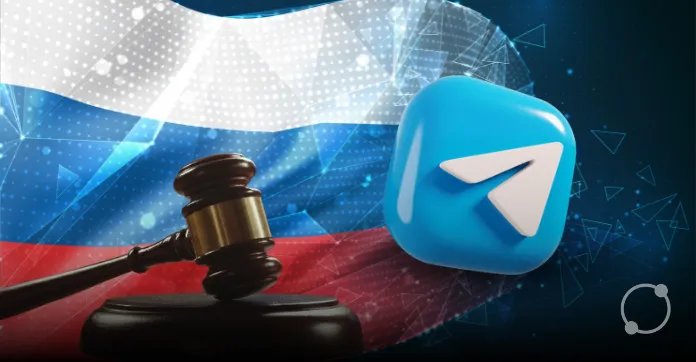
Russia has started restricting access to Telegram to tighten control over online communications. The move, which reportedly took effect on Feb. 10, will target one of Russia’s most widely used messaging platforms as a part of its renewed escalation in the country’s long-running effort to tighten control over digital services.
According to Russian pro-state outlet RBC, the restrictions were initiated by the federal communications regulator Roskomnadzor, citing three sources familiar with the matter. Even though the agency has not publicly detailed the measures, widespread user disruptions were reported across the country for a second consecutive day.
Russia to Restrict Telegram Again
The Kremlin has embarked on a larger initiative to lessen dependence on international digital tools and plan for a state-run internet ecosystem, with a restriction among the targets. For state officials, such decisions have long been presented as a step towards security and sovereignty, especially as geopolitical tensions persist and information control remains a top priority.
Russian lawmaker Andrei Svintsov told a pro-state outlet Ostorozhno Novosti that Telegram may be under pressure due to alleged non-compliance with domestic legal guidelines. No specific violations were identified. Roskomnadzor has yet to issue a formal statement confirming the scope or duration of the restrictions.
Telegram users across Russia reported significant service degradation. Complaints on outage-monitoring platforms climbed to roughly 15,000, far exceeding normal traffic levels. A significant portion of complaints included problems downloading photos and videos, and slowed loading times and full connection failures.
In previous enforcement actions, Russian authorities were known to call these tactics ‘restricting the work’ of an app. In practice, that usually entails throttling traffic until a service is nearly unusable, rather than a full legal ban. Telegram was launched in 2013 by Pavel Durov, a Russian-born entrepreneur. Despite its provenance, Durov left Russia years ago and the service functions outside of the country’s legal reach. That distance has long complicated Moscow’s efforts to exert direct control over the service.
Notably, many Russian government-aligned media outlets rely heavily on the platform and have built audiences numbering in the millions. Telegram channels remain a primary distribution tool for official messaging, war coverage, and domestic political narratives.
The current restrictions follow earlier measures aimed at curbing foreign messaging apps. In August 2025, Roskomnadzor effectively blocked voice calls on Telegram and WhatsApp, and cited their alleged use in fraud schemes, extortion cases, and recruitment for sabotage activities.
Earlier in 2025, President Vladimir Putin signed legislation establishing a national digital platform centered on the state-developed Max messenger. The platform is designed to integrate messaging with government services, including identification and payments. Human rights organizations have warned that such integration could significantly expand state surveillance capabilities.
Telegram’s history with Russian authorities has been turbulent. In 2018, a Moscow court ordered the app banned after it refused to provide encryption keys to the Federal Security Service. Enforcement efforts resulted in the blocking of millions of IP addresses, causing widespread collateral disruption to unrelated online services. The ban was lifted in 2020 after Telegram agreed to assist in extremism-related investigations.
More recently, access to Telegram was blocked in parts of Dagestan and Chechnya in March 2025 due to security concerns. A widening network for access means more Russians are choosing to use virtual private networks to avoid throttling and censorship. VPN usage has increased during previous enforcement periods and remains a major escape hatch for users interested in uninterrupted connectivity to restricted platforms.
The renewed scrutiny of Telegram also comes as the platform aims to go beyond messaging. The recent launch of TON Pay by the TON Foundation will see Telegram as a potential settlement layer for blockchain-based payments. The software development kit allows payments in Toncoin and USDT within Telegram Mini Apps, reinforcing the platform’s growing economic relevance.