
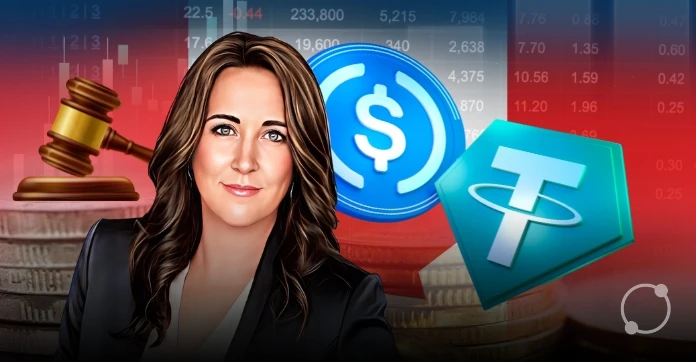
What to Know:
-
Bank of Canada says stablecoins must have “guardrails” to ensure safety.
-
Risks include sudden collapses that could wipe out investor money.
-
Canada aims to align with global rules as stablecoins enter daily use.
The Bank of Canada has made it clear, stablecoins are going to be part of everyday life, they’ll need stronger rules to keep people safe.
Deputy Governor Carolyn Rogers spoke this week about the growing role of stablecoins—cryptocurrencies that are designed to hold a steady value, often tied to something like the U.S. or Canadian dollar. She called for “guardrails” so that these digital tokens don’t create risks for households, businesses, or the wider financial system.
Why Stablecoins Are on the Radar
Stablecoins are supposed to offer the best of both worlds: the speed and borderless nature of crypto, combined with the reliability of traditional money. In theory, a stablecoin should always be worth about one dollar or the same amount of money as the fiat currency it is pegged to.
But things haven’t always gone so smoothly in real life. Some high-profile stablecoins in the past lost their value suddenly, wiping out billions in investor money. Rogers pointed out that without proper oversight, people could end up trusting in money that might not actually be stable at all.
“Money only works if people can count on it,” she said. If a token that’s meant to be as safe as cash suddenly collapses, it could shake confidence far beyond the crypto world.
Canada isn’t alone in thinking about this. The European Union recently rolled out a sweeping set of rules for digital assets, and the United States is debating similar steps. Rogers stressed that Canada can’t afford to lag behind.
“If other countries set up solid frameworks and Canada doesn’t, we risk falling out of step,” she warned. This could make it harder for Canadian businesses and consumers to take part in the global digital economy.
How Might the Regulations Appear?
The message is clear, even though Rogers did not specify specific regulations: stablecoin issuers will probably have to adhere to strict guidelines, just like banks do. That might consist of:
Complete coin backing: Ensuring that every token is supported by reliable, high-quality assets such as cash reserves or government bonds.
Unambiguous accountability: Stablecoin issuing companies must demonstrate their ability to protect customers’ funds.
Consumer protections: Measures to prevent common people from suffering if the value of a coin declines or if the business that issues it fails.
Building trust is the goal. Stablecoins must inspire the same confidence that consumers do when they are unsure if the dollars in their wallet will be accepted at the store.
Why It Matters to Everyday Canadians
This debate may seem abstract to the majority of Canadians. However, consider how rapidly digital payments have dominated everyday life. Nowadays, many people hardly ever use cash. Stablecoins, which can be used to pay online without bank delays, send money overseas instantly, or even buy coffee at the corner store, might be the next big thing.
However, there are actual risks in the absence of regulations. Millions of people could lose money if a well-known stablecoin suddenly collapses. Additionally, it might cause panic throughout the financial system, shocking even non-crypto users. The Bank of Canada is intervening early for this reason. As Rogers clarified, the objective is to ensure that innovation is built on a strong foundation rather than to stifle it.
The Path Ahead
What comes next, then? The government of Canada will have to choose how to proceed with regulation. Working closely with legislators, financial regulators, and even foreign partners is probably necessary for that.
The message from the central bank is simple: stablecoins might one day play a big role in how Canadians pay and save. But before that happens, the country needs clear rules to make sure they’re safe, reliable, and worthy of public trust. As Rogers put it, “It’s better to build the guardrails now than to try fixing the road after the crash.”
Also Read: Will SEI’s Slow Days Get Over Soon? What To Expect