What To Know:
- Amid Iran’s ongoing protests, Chainalysis data shows a sharp rise in BTC moving from Iranian exchanges to personal wallets after protests began on December 28.
- As the local currency plunged and access risks grew, Iranians turned to Bitcoin for preservation, portability, and control outside state-regulated systems.
- Wallets tied to the IRGC accounted for over half of Iran’s crypto inflows in Q4 2025, highlighting parallel use of digital assets by both citizens and power structures.
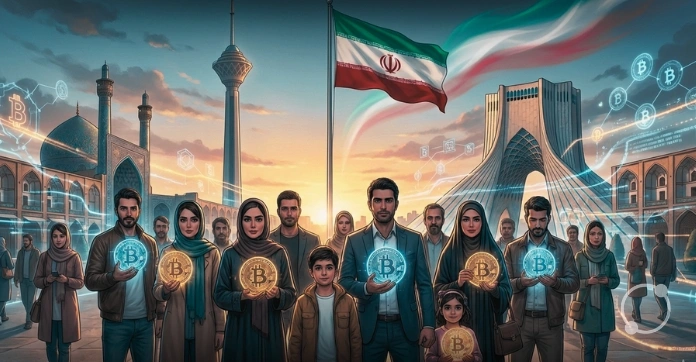
Amid intense protests across Iran and the country’s intensifying economic crisis, several Iranians are moving Bitcoin off domestic exchanges and into personal wallets at a growing pace. This move by people is done to seek protection from inflation, surveillance, and sudden restrictions on access to money.
Iran Crisis: Citizens Hodl Bitcoin Amid Protest
Blockchain intelligence firm Chainalysis has provided updated data which demonstrates a noticeable upturn after December 28, 2025, the day of the large-scale protests on the Iranian exchanges, in Bitcoin withdrawals. The trend continued until January 8, when authorities imposed a nationwide internet shutdown.
Chainalysis analysts describe the action as being intentional and deliberate. In periods of both political and economic instability, self-custody can be a form of financial self-preservation. For many Iranians, having cryptos on centralized platforms carries risks that feel increasingly intolerable with account freeze, forced closures, and limited access during blackouts. At the heart of this change was the collapse of the Iranian rial. Within weeks the value of the currency was sliding at a shocking pace. By December’s end, one US dollar was trading at roughly 42 rials on official rates. By mid-January, that number had soared above 1,050, eating into purchasing power, and pushing everyday costs further out of reach.
Local currency savings have dwindled and households scramble for alternatives. One viable alternative has emerged: Bitcoin, with its fixed supply and worldwide liquidity. Its appeal is less speculation than utility. It may be stored outside banks, transported from country to country, and accessed without the approval of financial authorities. Those features are especially relevant in a nation wrestling with inflation, sanctions, and periodic outages of connectivity. Chainalysis points out that similar patterns appear across the world during periods of conflict or repression. Crypto activity also tends to spike when financial systems strain or governments tighten control.
This holds true particularly with withdrawals into self-hosted wallets. Iran’s current surge fits squarely within that historical pattern.
Moreover, wallets associated with the Islamic Revolutionary Guard Corps accounted for more than half of all crypto value received in Iran during the fourth quarter of 2025. On-chain data indicates that these addresses processed over $3 billion in transactions throughout the year, although analysts say the figure is likely higher than that. Those estimates are based solely on wallets that are publicly identified and sanctioned by US and Israeli authorities. They do not capture potential shell entities or undisclosed networks linked to the IRGC’s broader financial operations.
Chainalysis says that number will rise as more affiliated addresses are uncovered. Over recent years, the IRGC group has extended its reach across key industries, trade routes, and financial channels and frequently operates in parallel with formal institutions. Crypto provides access to cross-border value flows amid such heavy sanctions. Chainalysis reported higher daily transaction volumes and transfers to personal addresses during the protest period.
Notably, Iran’s overall crypto activity reached an estimated $7.78 billion in 2025, growing faster than the year before.
As the rial weakens and trust in institutions erodes, Iranians are moving Bitcoin into personal custody to reclaim control in a system that offers very little.
The protests that began in late December 2025 over Iran’s collapsing economy have since taken a sharp political turn. What first began as protests about inflation, unemployment, and the falling rial has now become a nationwide uprising. Protesters are openly calling for an end to clerical rule under Supreme Leader Ayatollah Ali Khamenei. More than 3,400 people have been killed since demonstrations started on Dec. 28, said human rights groups and opposition sources.
Also Read: Skepticism Grows Over Claims Venezuela Holds 600,000 Bitcoin