
What To Know:
- Vitalik Buterin warned that hardware, not just software, is now the weakest link in digital trust, saying, “Not your silicon, not your keys.”
- He highlighted the “silicon sovereignty” crisis, where even open-source AI relies on closed, unverifiable chips.
- Buterin urged a shift from DeFi to decentralized computing (DeComp) to ensure user control, verifiable hardware, and digital sovereignty.
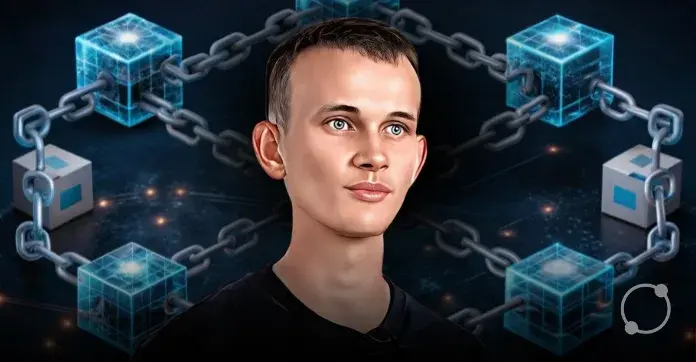
At the tenth edition of Wanxiang Blockchain Week, Ethereum co-founder Vitalik Buterin shared a new perspective on blockchain development saying, “Not your silicon, not your keys.” Expanding on the popular crypto phrase “not your keys, not your coins,” Buterin argued that in the age of artificial intelligence and advanced cryptography, hardware itself has become the weakest link in the digital trust chain.
Over the past decade, hardware trust has eroded, Buterin added. Mobile wallets, secure modules, and popular hardware wallets like Ledger depend on closed-source firmware, often embedded with proprietary chips. The global chip supply chain is dominated by a handful of manufacturers, Nvidia, AMD, TSMC, and Samsung, making it nearly impossible to verify whether the hardware executing critical computations is truly secure.
“But no matter how strong your cryptography is, if your hardware is compromised, the security is an illusion,” Buterin warned. “Attacks don’t just happen in code, they happen in the silicon you can’t see.”
Vitalik Buterin on Silicon Autonomy Crisis
According to Buterin, modern cryptography must evolve beyond mathematical proofs. In the era of verifiable computing, it’s not enough to verify what was computed, the industry must also verify who and what hardware executed it.
This becomes urgent as AI rapidly dominates how people interact with the digital world. Buterin identified three key challenges that make the “silicon sovereignty issue” both real and dangerous:
- AI models depend entirely on closed hardware.
Even open-source models like Llama or Stable Diffusion rely on closed GPUs and TPUs for computation. Their internal processes i.e., cache behavior, memory flows, and inference weights, are hidden at the chip level. “You can have open-source AI,” he said, “but still not know whether the results have been tampered with.” - AI is becoming the new operating system of human interaction.
Instead of directly using computers, people now operate through AI intermediaries like ChatGPT, Gemini, or Claude. “Our thoughts, data, and creativity increasingly rely on someone else’s silicon,” Buterin noted. His views were not just about cybersecurity, it was a warning about autonomy and digital sovereignty. - AI and cryptography together define the next trust frontier.
As AI systems generate and interpret information, new cryptographic tools like zero-knowledge proofs (ZK), trusted execution environments (TEE), and fully homomorphic encryption (FHE) can ensure that computation happens transparently, even inside encrypted states. This fusion of AI and cryptography, Buterin said, is the future foundation of digital trust.
Buterin outlined some recommendations, saying that users must take back control of their computing environments. “Use offline machines for wallet operations, run local AI models like Llama or PrivateGPT, and choose open-source hardware wallets,” he said.
He also urged the community to favor open-source software and reproducible builds, and to follow emerging projects like RISC-V and open FPGA chips designed for verifiable, ZK-friendly computation.
For developers and enterprises, Buterin called for the creation of a verifiable hardware ecosystem, which means combining open-source chip architectures, auditable firmware, and cryptographic proofs of execution. “Every AI model in the future,” he suggested, “should come with a ZK proof showing what hardware it ran on, which weights it used, and whether the output was modified.”
Perhaps most notably, Buterin reframed the blockchain movement’s direction for the coming decade. “The next era of blockchain won’t just be decentralized finance,” he said. “It will be decentralized computing.”
This shift from DeFi to DeComp, he believes, envisions a world where individuals can control, verify, and encrypt their own computing environments. Privacy-preserving tools like ZK, FHE, and MPC will allow users to confirm that computations, whether from AI models or decentralized apps, are executed honestly without revealing pcrrivate data.
“Cryptography protects your secrets but verifiable hardware protects your sovereignty”, concluded Buterin.
Also Read: Ethereum’s Vitalik Buterin Clashes With Peter Thiel Over Anti-Cypherpunk Ideals